
Editorial review: Disc golf has many independent early origin stories. This timeline follows documented milestones from the PDGA, DGA, and equipment makers rather than claiming one person played the first-ever game.
There is no single first throw
People have aimed flying objects at targets for far longer than plastic discs have existed. Groups in different places independently played golf-like games with trees, posts, trash cans, and other objects. That makes “Who invented disc golf?” more complicated than naming one date.
The modern sport emerged when recurring competitions, permanent courses, standardized catching targets, a governing association, and equipment designed for golf connected those scattered ideas.
1960s and early 1970s: organized ideas take shape
George Sappenfield promoted a flying-disc golf activity in California in the 1960s. By August 1970, Jim Palmeri, his brother, and a Rochester, New York group were playing regular competitive rounds; their later city championships featured disc golf prominently. These were among several communities developing the game.
1975: Oak Grove becomes the landmark course
In 1975, “Steady” Ed Headrick installed the first official disc golf course at Oak Grove Park in Pasadena, California. Its original permanent targets were poles. The site became a lasting reference point for the sport’s course history.
1976–1977: DGA, the PDGA, and the chain target
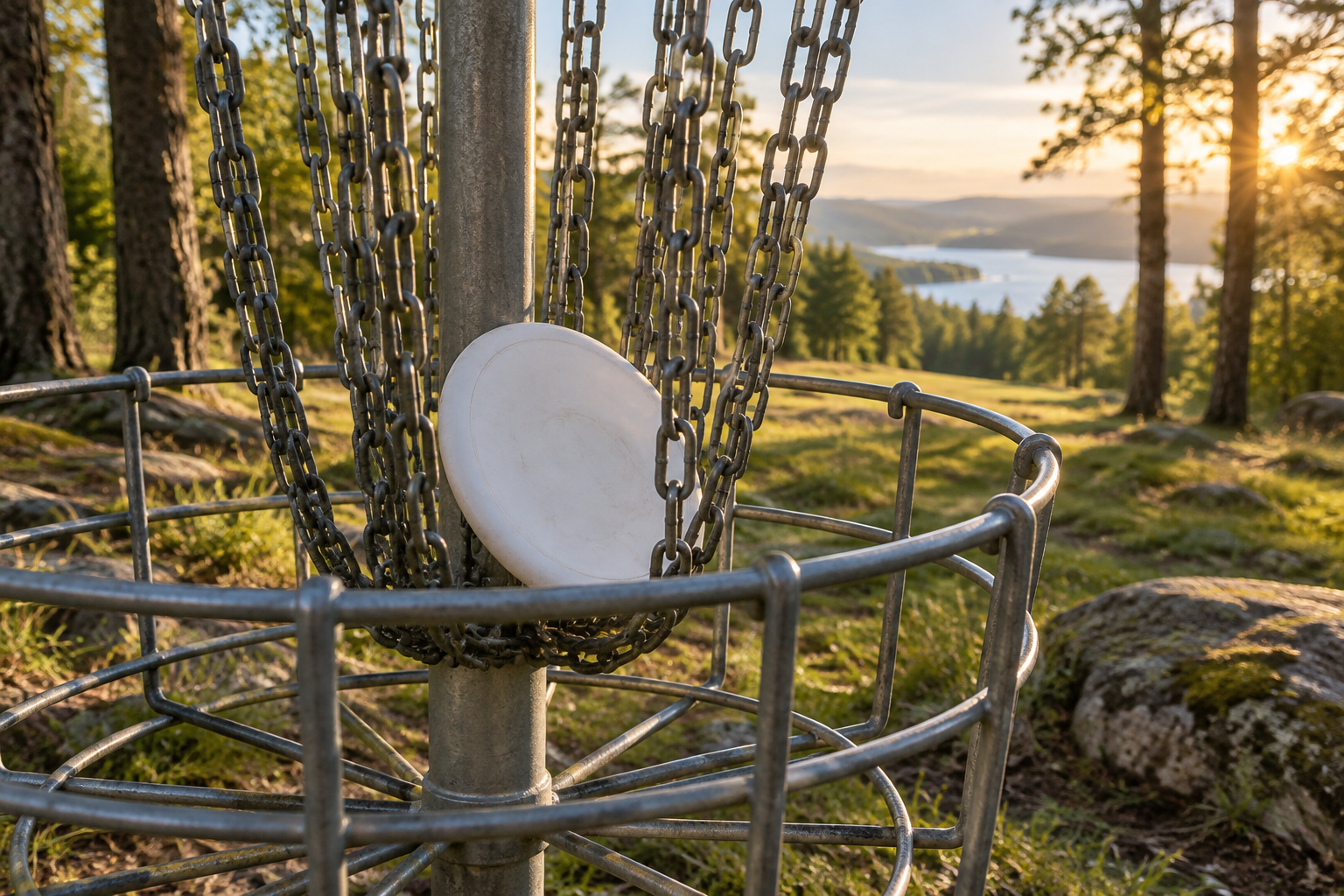
Headrick founded the Disc Golf Association business in April 1976 to manufacture equipment and develop the game. The Professional Disc Golf Association also dates to 1976. In 1977, Headrick received the patent for the Disc Golf Pole Hole, the chain-and-basket concept that became the foundation of modern targets.
The chains did more than replace an object target. They created a visible, standardized finish that could catch discs arriving from different directions and made a course recognizable to a new player.
1980s: players take governance and discs get faster
The first PDGA World Championship was held in 1982. In the following years, players assumed more control of the association, culminating in formal member governance and a board election later in the decade.
Equipment changed at the same time. In 1983, Champion Discs—now Innova—introduced Dave Dunipace’s purpose-built, beveled-edge golf-disc design. A sharper rim produced more speed and distance potential than the catch-oriented discs commonly used before it. Specialized putters, midranges, and increasingly fast drivers followed.
1990s and 2000s: courses, events, and equipment diversify
More municipalities, clubs, schools, and private properties installed courses. Manufacturers expanded plastic blends and flight options, while events developed clearer standards. The United States Disc Golf Championship began in 1999, and online course directories and scoring tools later made it easier to find and document play.
2010s and 2020s: a broader international sport
Disc golf’s manufacturing base and player community became increasingly international. Streaming and tour coverage made professional play easier to follow, while clubs continued to drive local leagues, course maintenance, beginner events, and tournaments. The PDGA directory passed 10,000 courses in 2022, a milestone within the association’s own historical record.
History lives locally too. Tee signs, club archives, tournament flyers, and long-time volunteers often preserve a course’s story. Ask before discarding old materials.
Why the history matters when buying a disc
Modern categories are the result of decades of design. A putter’s blunt rim, a fairway driver’s controllable wing, and a distance driver’s wide bevel solve different versions of the same challenge: convert a human throw into a useful line and landing. Learn those roles in disc types explained.
Manufacturer histories also explain today’s naming systems and plastic families. Continue with major disc golf brand histories.