Disc Battle of the Day: Discraft Zone vs Discraft Zone OS
Two icons of the overstable approach slot go head-to-head today: the touch-friendly Discraft Zone and its beefed-up sibling, the Discraft Zone OS. Both are 4-speed workhorses, but their glide, turn, and fade create very different results. Here’s how to pick the right tool for your line, power, and wind.
Quick Flight Numbers

Discraft Zone
Pros
- Neutral high-speed stability (0 turn) holds flat releases then finishes with a predictable, workable fade (3).
- Extra glide (3) gives effortless push on 150–280 ft approaches without needing to overpower it.
- Excellent forehand control thanks to a shallow, torque-resistant profile—laser approaches that still sit.
- Versatile: hyzer, straight-to-fade, or soft flex lines in both calm and moderate wind.
Cons
- In stout headwinds it can straighten out or lose bite compared to the OS.
- Not the best for forced spikes or giant skips; the fade is reliable but not dramatic.
- For very low-power players, it can still dump early instead of holding dead-straight.
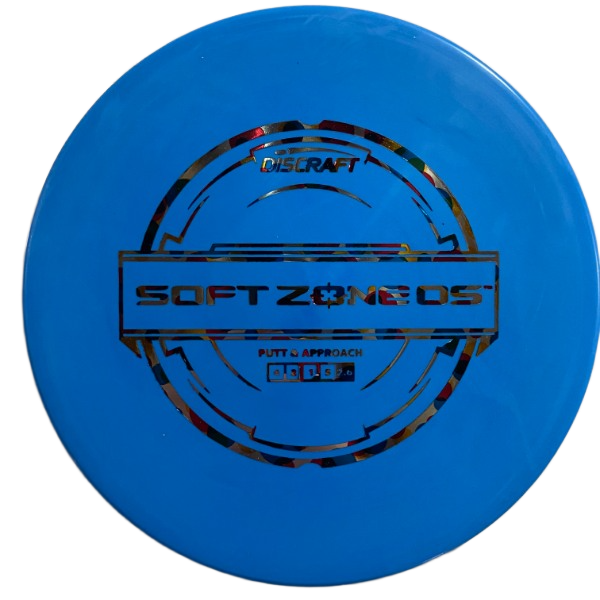
Discraft Zone OS
Pros
- Extreme wind fighter: +1 turn and 5 fade mean it won’t flip and will always finish hard.
- Elite utility disc for spike hyzers, forced flex forehands, and deliberate big-skip ground play.
- Handles maximum torque—perfect for power forehands and get-out-of-trouble shots.
- Confidence piece near hazards: dumpy finish makes distance control and edge play more predictable.
Cons
- Lower glide (2) shortens carry; expect earlier, sharper fade and reduced workable range.
- Too beefy for straight woods lines or gentle turnovers; demands commitment and speed.
- Can feel unforgiving for newer arms that need a little ride before the finish.
Head-to-Head
- Calm to breezy days: choose the Zone for straight-to-fade control; reach for the Zone OS when the wind howls.
- Backhand approaches: Zone for point-and-shoot with a soft, reliable dump; Zone OS for pure hyzer or steep spikes that must finish.
- Forehand game: Zone for touch flicks and line-shaping; Zone OS for torque-heavy forehands, flexes, and skips.
- Line shaping in the woods: Zone holds angles and lands flat; Zone OS is better in open space or when you need to crash hard.
- Ground play: Zone tends to check up; Zone OS creates bigger, more predictable skips when thrown on low hyzer.
- Player power: developing arms will score more control and distance with the Zone; power throwers gain a specialized hammer with the Zone OS.
Verdict
If you want a primary approach disc that covers the most shots, bag the Discraft Zone. Its 4 | 3 | 0 | 3 flight balances workability and reliability for forehand and backhand in most conditions. If you routinely battle headwinds, lean on power forehands, or want a guaranteed dump-and-skip finish, the Discraft Zone OS is the specialist you’ll trust when the line absolutely cannot flip. Many players will benefit from carrying both: the Zone as the everyday workhorse, and the Zone OS as the wind-and-utility hammer.