Disc Battle of the Day: Axiom Tempo vs Discraft Challenger OS
This matchup pits two overstable control pieces against each other: the approach-speed Axiom Tempo (4-speed) and the putter-speed Discraft Challenger OS (2-speed). Both promise reliability and wind-fighting confidence, but they carve very different lines and landing shapes—perfect for deciding which overstable slot you truly need.
Quick Flight Numbers
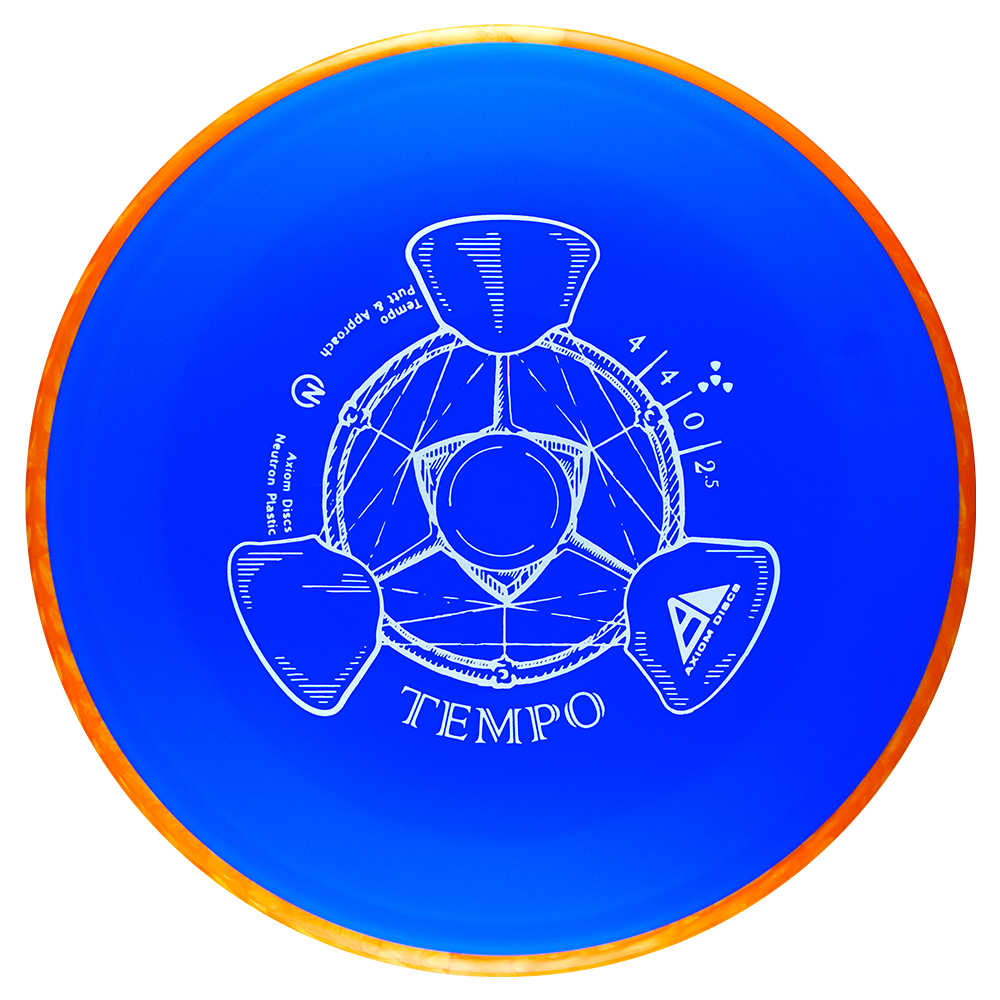

Axiom Tempo
Pros
- Speed 4 with 0 turn gives straight push before a dependable 2.5 fade—great for controlled 220–280 ft approaches.
- More glide (4) than many OS approaches, helping it carry to pin-high without overthrowing the hyzer.
- Handles forehand torque well; the fade pops reliably even on flat releases.
Cons
- Not a true “dump” finish—2.5 fade is reliable but less meathook than purpose-built OS putters.
- Extra glide can sail long on touchy greens if you don’t control nose angle.
Discraft Challenger OS
Pros
- Speed 2 and fade 3 create a slow, blunt, and very trustworthy finish for short-range hyzers and headwind putts.
- Low turn (0) resists torque on forehand standstills and spinny approaches inside 225 ft.
- Minimal glide (3) helps it sit quickly and avoid big skips near OB or fast greens.
Cons
- Shorter ceiling than the Tempo—requires more power to push straight before the fade.
- Can feel too overstable for newer players trying to get clean, straight putter flights.
Head-to-Head
- Pure distance control: Choose the Challenger OS when you want short, dumpy hyzers that land soft; pick the Tempo when you need a longer, straighter push before finishing.
- Wind: Both handle wind, but the Challenger OS excels in strong headwinds under 225 ft; the Tempo shines in moderate winds where you still want carry.
- Shot shape: Tempo for straight-to-fade gaps and longer forehand approaches; Challenger OS for spikey hyzers, flex-killers, and bailout lines that must finish left (RHBH).
- Ground play: Challenger OS tends to sit; Tempo can glide and skip a touch more depending on angle.
- Skill level: Newer arms will find the Challenger OS very predictable at short range; developing players may prefer the Tempo’s extra carry to hit pin-high on longer approaches.
Verdict
If your priority is short-range reliability and wind-beating hyzers that sit down near the pin, the Discraft Challenger OS is the safer, simpler tool. If you want an overstable approach disc that still pushes forward and shapes longer lines—especially for forehand touch shots—the Axiom Tempo offers more range and versatility. Many bags will benefit from both: Challenger OS for the dump-and-sit slot, Tempo for the push-and-fade lane.